
Does a Finished Basement Add as Much Value as Above-Ground Square Footage?
August 4, 2026
QUICK ANSWER: No, a finished basement is not valued the same way as above-ground square footage on an appraisal. Under the ANSI Z765 measurement standard used across the industry, only finished, heated space that sits fully above grade counts toward a home's gross living area (GLA). A finished basement, even one with new flooring, a full bathroom, and a home theater, gets reported as a separate line item and typically contributes value at a lower rate per square foot than the main living floors. That doesn't mean the space is worthless. It means appraisers measure and adjust for it differently, and understanding that difference explains a lot about why two homes with the same total square footage can appraise for noticeably different amounts.
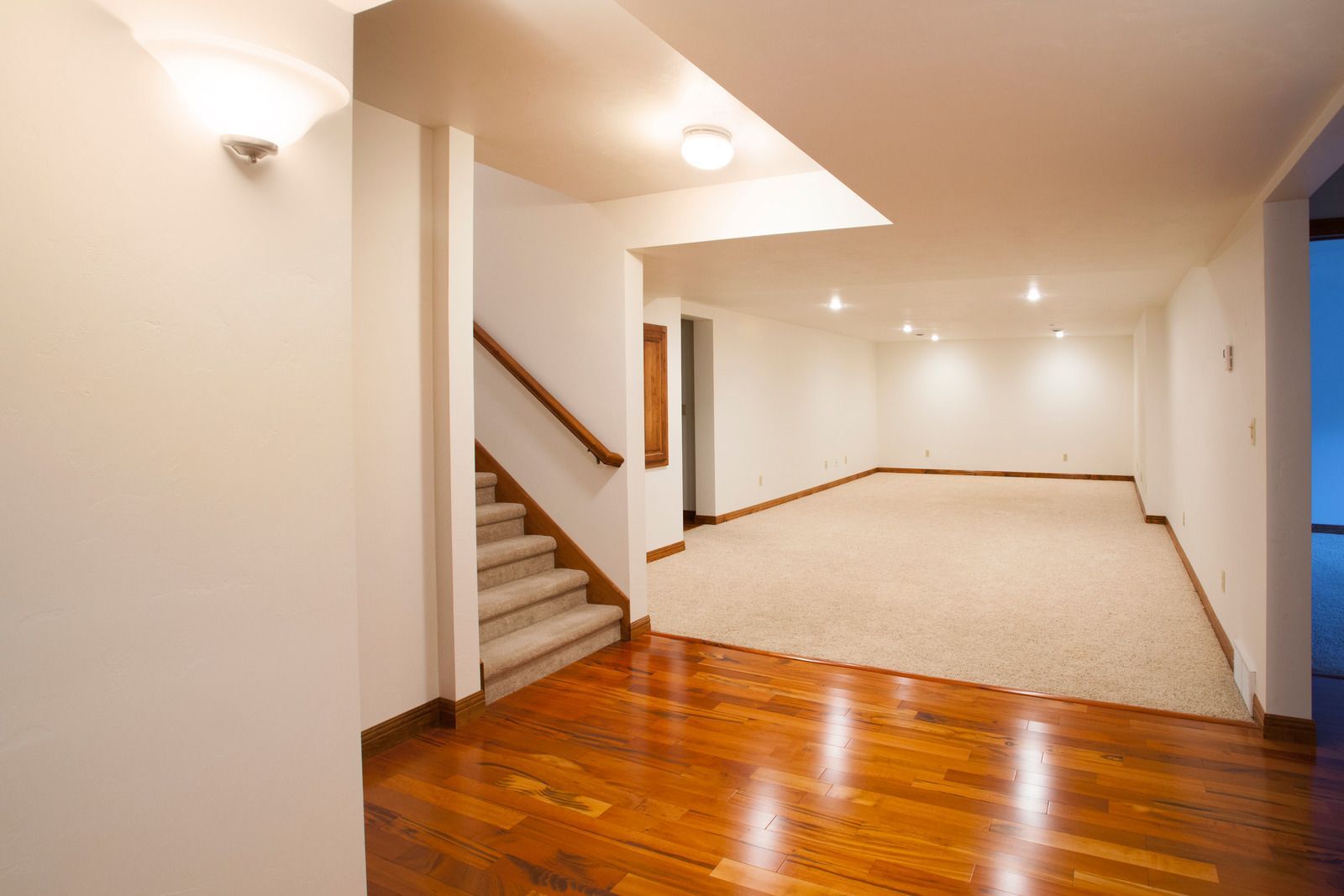
You finished the basement a few years back. New carpet, recessed lighting, a bathroom, maybe a wet bar. It functions exactly like the rest of the house, and as far as daily living goes, it is the rest of the house. Then an appraisal comes back and the basement is broken out separately, valued at what feels like a discount compared to the square footage upstairs. If you assumed every finished square foot in your home would be treated equally, that report can be a surprise. It isn't an oversight or a judgment call by one appraiser. It's how the methodology behind
residential appraisals is built, and once you see the reasoning, the gap makes a lot more sense.
Gross Living Area Only Counts What's Above Grade
The starting point for almost every residential appraisal is gross living area, commonly shortened to GLA. This is the number buyers see in listings, the figure lenders use to size a loan against, and the baseline an appraiser uses to pull comparable sales.
GLA has a specific, narrow definition. Under the ANSI Z765 standard that most appraisers reference for consistent measurement, GLA includes only finished, heated areas that are fully above grade and meet minimum ceiling height requirements, generally at least 7 feet, with at least half of any sloped-ceiling area meeting that height. A room with a beautifully finished floor, drywall, and a permanent heat source still doesn't count toward GLA if it sits below ground level. It gets reported as basement area instead, on its own line.
This isn't about whether the basement is comfortable or well-built. It's about a consistent rule that lets every appraised home get measured the same way, so a four-bedroom, 2,400-square-foot house means roughly the same thing whether it's in Wake Forest or across the county line. If basement square footage got folded into the same total as above-grade space, that consistency would fall apart, and buyers, lenders, and appraisers would lose a reliable way to compare one property to another.
Why the Per-Square-Foot Value Is Different
Once basement space is separated out, the next question is what it's actually worth. The answer, almost always, is less per square foot than the floors above it, and there are a few practical reasons that hold up across most markets.
Basements typically have less natural light, and even a well-finished one usually reads as a different kind of space than a bedroom or living room upstairs. Buyers consistently perceive below-grade rooms as less desirable than equivalent above-grade rooms, and that perception shows up directly in what comparable sales support. Moisture and humidity are also a longer-term consideration in a below-grade space, even when a basement is dry and well-maintained today. None of these factors mean a finished basement lacks value. They mean the market, on average, doesn't pay the same rate for it that it pays for space with windows on three sides and a direct connection to grade.
When an appraiser works up an adjustment for basement finish, the process usually starts by establishing the home's above-grade value per square foot from comparable sales, then applying a separate, market-derived rate to the finished basement area. That rate is pulled from how comparable homes with similar basement finish actually sold relative to homes without it, not from a fixed formula. In some markets, a well-finished basement might add value close to half of what an equivalent above-grade square foot commands; in others, it's meaningfully less. The point isn't a specific ratio. It's that the below-grade rate is derived separately and is expected to differ from the above-grade rate.
In the Triangle, this comes up more in some pockets than others. Finished basements tend to show up more often on the rolling terrain around North Raleigh, Wake Forest, and parts of Durham, where lot grading allows for a daylight or walkout basement, than in the flatter areas of Cary or Apex, where crawl spaces and slab foundations are far more common. If you're comparing your home to a neighbor's and one of you has a basement and the other doesn't, that alone can explain part of a value gap that otherwise seems confusing.
TIP: Before you commit to the fireplace wall, sit on your actual couch and have someone hold a piece of cardboard where the center of the screen would land. Ten minutes in that seat tells you more about the viewing angle than any measurement. If your neck aches, plan on a tilting or full-motion mount from the start.
What Determines Whether Basement Space Even Counts as "Finished"
Before value even enters the conversation, an appraiser has to decide whether a basement room qualifies as finished living space at all, as opposed to unfinished or partially finished storage area. A few factors drive that call.
Heat
The space needs a permanent, adequate heat source built into the home's system. A space heater plugged into the wall or a decorative fireplace doesn't satisfy this. If the basement isn't heated the way the rest of the home is, it typically won't be credited as finished living area no matter how nice the flooring looks.
Ceiling height
Just as with above-grade rooms, a basement needs sufficient ceiling clearance to function as usable living space. A cramped, low-ceiling area, common in older homes with mechanical systems dropped into the basement, may not meet the threshold even if it's carpeted and painted.
Access and egress
A basement needs a reasonable way in and out, and if any portion of it is intended to function as a bedroom, a proper egress window or walkout door becomes a requirement of its own, separate from the general finished-space question. A basement without adequate escape access for a bedroom-type room won't get bedroom credit, even if the rest of the space is otherwise finished.
Finish quality and consistency
Appraisers look for finish that's consistent with the rest of the home, meaning comparable flooring, wall treatment, and trim, not a half-completed project with exposed studs on one wall. A basement that's finished in some sections and left raw in others is more likely to get a partial or reduced credit reflecting its actual condition.
Tip: If you're planning to finish a basement with resale value in mind, prioritize permanent heat, adequate ceiling height, and a full and consistent finish over cosmetic extras. A basement with a properly ducted HVAC connection and 7-plus feet of clearance throughout will get credited as finished space far more reliably than one with a portable heater and a section of exposed subfloor, regardless of how nice the furniture looks.
How This Plays Out on the Comparable Sales Grid
When an appraiser builds a report, comparable sales get pulled and adjusted line by line: above-grade square footage, bedroom and bathroom count, lot size, garage, and, separately, basement size and finish. This is where the distinction between above-grade and below-grade space becomes visible on paper rather than just conceptual.
Say your home and a nearby comparable both sit at roughly 2,000 square feet of GLA. If your comparable also has 800 square feet of finished basement and yours has an unfinished one, the appraiser doesn't just add 800 square feet to the comp's total and call it even. Instead, the basement finish gets its own adjustment, calculated at whatever the market has shown it supports, and that adjustment is applied separately from the above-grade comparison. This keeps the analysis honest: your unfinished basement isn't penalized as if it were missing 800 square feet of house, and the finished comparable isn't credited as if its basement were identical in value to its main floor.
This is also why homeowners sometimes feel their finished basement "doesn't count for much" on an appraisal, when in reality it is counting, just at a rate the market actually supports rather than a rate that matches the upstairs square footage.
WARNING: Don't assume a finished basement will close a value gap dollar-for-dollar with above-grade square footage when you're comparing your home to a similar-sized one without a basement, or when planning a renovation around expected value. The basement adjustment comes from local comparable sales, and it can swing quite a bit by market and even by neighborhood. A rule of thumb picked up from a different area, or a number pulled from a general online estimate, can set expectations that a formal appraisal simply won't back up.
Basement Value Still Matters, Just on Its Own Terms
None of this means finishing a basement is a wasted move. A well-finished, properly heated basement with good ceiling height and consistent finish quality is a real asset, and it shows up in a home's marketability, its usable square footage for daily life, and its appraised value, just accounted for separately from the GLA total. The distinction matters most when you're comparing your home to others, setting expectations before a refinance or sale, or trying to understand why a report came back the way it did.
Knowing the difference between above-grade and below-grade valuation ahead of time turns what feels like an inconsistency in the appraisal process into something you can actually plan around.
Frequently Asked Questions
Does a finished basement count toward my home's total square footage?
No, not toward gross living area. Under the ANSI Z765 standard, only finished, heated space fully above grade counts as GLA. A finished basement is always reported separately.
Is a finished basement worth less per square foot than the rest of the house?
Generally, yes. Below-grade space typically commands a lower per-square-foot value due to natural light, buyer perception, and moisture considerations. The exact rate depends on local comparable sales.
What makes a basement room count as "finished" for appraisal purposes?
A permanent heat source, sufficient ceiling height, reasonable access, and finish consistent with the rest of the home. A portable heater or partially raw space limits full credit as finished living area.
Can a basement bedroom count toward my home's bedroom total?
Only if it meets the same egress standards required of any bedroom, including a proper escape window or walkout door. Without conforming egress, a basement room won't get bedroom credit.
Why did my neighbor's finished basement seem to add more value than mine?
Basement adjustments come from comparable sales in the immediate market, so differences in finish quality, ceiling height, walkout access, and the specific comparables used can produce different results.
Should I finish my basement before an appraisal?
That depends on your goals and timeline, worth discussing directly rather than assuming a fixed return. Permanent heat, adequate ceiling height, and consistent finish quality matter more than cosmetic upgrades.
A Consistent Way to Measure Real Value
A finished basement is a genuine asset, but it plays by a different set of rules than the square footage above it. Gross living area sticks to what's finished, heated, and fully above grade, while basement space gets its own line, its own market-derived rate, and its own qualifying factors around heat, ceiling height, access, and finish quality. Once that separation makes sense, an appraisal that treats your basement differently from your main floor stops looking like an inconsistency and starts looking like a consistent, market-grounded way of measuring a home.
With more than 20
years of experience, Moore 4-U Appraisals
has spent decades measuring and valuing homes throughout the Wake Forest area, from above-grade living space down to the basement, using the same recognized standards on every property. That consistency is what makes a report easy to trust, whether you're sizing up a refinance, comparing your home to a neighbor's, or simply trying to understand what every finished square foot of your house is actually contributing to its value.